
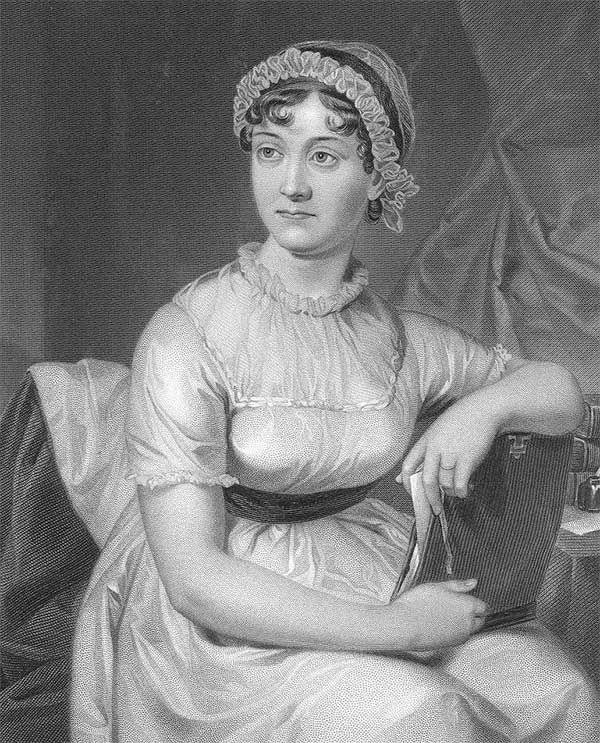
Jane Austen (born 16 December 1775 in Steventon, Hampshire, England; died 18 July 1817 in Winchester, Hampshire, England) was an English novelist whose works are celebrated for their keen social commentary, wit, and exploration of love, family, and manners in early 19th-century England. She is widely regarded as one of the greatest writers in English literature.
Early Life
Jane Austen was born into a middle-class family as the seventh of eight children of Reverend George Austen, a clergyman, and Cassandra Leigh Austen. She grew up in a lively, literary household, surrounded by her family’s love of reading and storytelling.
From an early age, Jane displayed a talent for writing. She composed stories, plays, and parodies for family entertainment, which later influenced her mature novels. Her formal education was limited, though she attended boarding schools briefly; much of her learning came from reading widely in her father’s library.
Personal Life
Jane Austen never married, though she experienced at least one known romantic attachment. She lived a quiet life with her family in Hampshire and later in Bath. In 1801, her father died, leaving the family in modest financial circumstances, which constrained her options.
Despite her limited social and financial independence, Austen maintained close relationships with her family, especially her sister Cassandra, who was her confidante and lifelong friend. Jane Austen’s personal experiences and observations of social manners and the lives of women in her society informed much of her fiction.
She fell ill in 1816 and died the following year at the age of 41, likely from Addison’s disease or Hodgkin’s lymphoma. She was buried in Winchester Cathedral.
Major Works
Jane Austen wrote six major novels, all of which are renowned for their enduring insight, humor, and social commentary. Most were published anonymously during her lifetime.
Novels
- Sense and Sensibility (1811) – Explores the lives, loves, and struggles of the Dashwood sisters, balancing reason and emotion.
- Pride and Prejudice (1813) – Perhaps her most famous work; follows Elizabeth Bennet as she navigates love, family expectations, and social class.
- Mansfield Park (1814) – Focuses on the moral growth of Fanny Price in a wealthy, morally complex household.
- Emma (1815) – Tells the story of Emma Woodhouse, a headstrong young woman who learns about love, self-awareness, and the limits of social influence.
- Northanger Abbey (published posthumously 1817) – A satire of Gothic novels and young women’s romantic fantasies, featuring Catherine Morland.
- Persuasion (published posthumously 1817) – Follows Anne Elliot as she navigates second chances in love and society.
Juvenilia and Other Works
- Austen also wrote several early works and short stories known collectively as Juvenilia, including Love and Freindship (sic) and The History of England.
- She left unfinished novels, including Sanditon and The Watsons, which were published posthumously.
Legacy
Jane Austen’s novels have had an enduring impact on literature and culture. She is celebrated for her wit, precise social observation, and strong, complex female characters. Her works have inspired countless adaptations in film, television, and theater, remaining widely read and studied today.
Austen is often praised for her ability to blend romance, realism, and social critique, making her a timeless voice in English literature.